1.800.668.3752
Call us for a free quote
Call us for a free quote
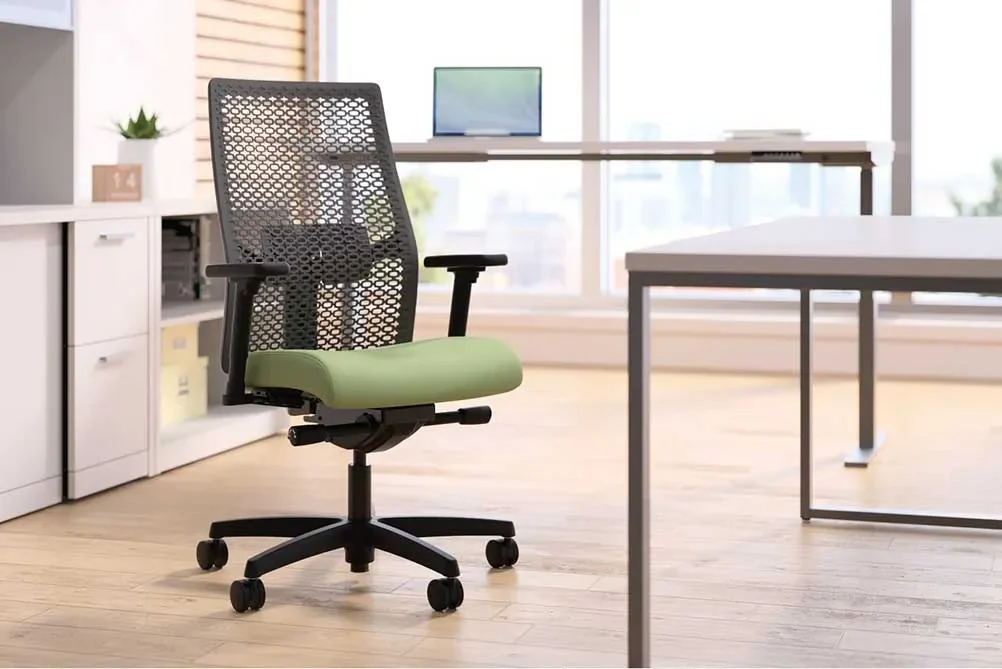
Choosing between a mid back chair vs high back chair affects your daily comfort, posture, and long-term health. The right chair supports your spine correctly for your work style and body type, while the wrong choice can lead to neck pain, back discomfort, and decreased productivity over time.
At Office Furniture Plus, we’ve helped thousands of businesses and individuals across Texas select the perfect office seating. With showrooms in Irving (Dallas), Austin, and San Antonio, we carry both new and used mid back and high back chairs from over 220 manufacturers. This guide breaks down the key differences to help you make an informed decision based on your specific needs, workspace, and budget.
| Key Takeaways |
| Mid-back chairs support the lower and middle back (lumbar and mid-spine), typically measuring 18-20 inches in height, ideal for task-oriented work and frequent movement |
| High-back chairs provide full back support including neck and shoulders, typically measuring 22-30+ inches, best for extended sitting and executive settings |
| Choose mid-back if you need mobility, have a smaller workspace, work in collaborative environments, or have a budget under $300 |
| Choose high-back if you sit 6+ hours daily, need neck/shoulder support, experience upper back tension, or want an executive aesthetic |
| Body height matters: Users over 6 feet typically need high-back chairs for proper head and neck support |
| Both styles can offer excellent ergonomic features—back height alone doesn’t determine chair quality |
The primary distinction between mid-back and high-back chairs lies in the extent of spinal support each provides. Mid-back chairs support your lower back (lumbar region) and mid-spine, stopping below the shoulder blades. High-back chairs extend upward to support your entire spine, including your shoulders, neck, and in some cases, your head.
Support Coverage Comparison:
| Feature | Mid-Back Chair | High-Back Chair |
| Back Height | 18-20 inches | 22-30+ inches |
| Support Area | Lumbar to mid-spine | Full spine to neck/head |
| Typical Weight | 25-40 lbs | 35-60 lbs |
| Footprint | Compact | Larger |
| Price Range | $150-$500 | $300-$1,500+ |
Both mid-back and high-back chairs can offer excellent ergonomic support when properly designed and adjusted. The “better” option depends entirely on your body type, sitting duration, and work style.
Mid-back chairs excel at:
High-back chairs excel at:
Neither style is inherently more ergonomic. A poorly designed high-back chair offers less support than a well-designed mid-back chair with proper lumbar adjustment.
Mid-back chairs serve specific user profiles and work environments particularly well. Consider a mid-back chair if you match these criteria:
Ideal for task-focused workers: If your workday involves frequent transitions between typing, writing, reaching for materials, and standing, a mid-back chair supports movement without restriction. The lower profile allows you to twist, reach, and shift positions naturally.
Perfect for collaborative spaces: Open offices, conference rooms, and shared workspaces benefit from mid-back chairs. Their smaller visual footprint creates a less hierarchical atmosphere and allows better sightlines across the room.
Budget-conscious buyers: Mid-back chairs typically cost 30-50% less than comparable high-back models from the same manufacturer. You can often access premium ergonomic features like adjustable lumbar support, seat depth adjustment, and quality materials at a lower price point.
Smaller workspaces: If your desk area is compact, a mid-back chair takes up less physical and visual space. This matters in home offices, cubicles, or anywhere square footage is limited.
Users under 5’10”: Shorter users often find mid-back chairs provide adequate support for their frame without the excess material that high-back chairs offer.
High-back chairs serve users with specific support needs and work patterns. Consider a high-back chair if you fall into these categories:
Extended sitters: If you regularly sit for 6+ hours daily, the additional neck and shoulder support becomes increasingly valuable. High-back chairs help distribute your body weight across a larger surface area, reducing pressure on your lower back.
Users experiencing upper body tension: If you frequently experience neck pain, shoulder tightness, or upper back discomfort, a high-back chair addresses these problem areas directly. The extended support encourages proper alignment of your entire spine.
Taller individuals: Users over 6 feet tall need the additional height that high-back chairs provide. A mid-back chair on a taller person leaves the upper spine and neck unsupported, which defeats the purpose of ergonomic seating.
Executive and private offices: High-back chairs project authority and professionalism in leadership roles. They create a more formal aesthetic appropriate for private offices where you meet with clients, conduct interviews, or lead discussions.
Users who recline frequently: If you lean back to read documents, take phone calls, or think through problems, a high-back chair supports your entire spine in the reclined position. Mid-back chairs leave your neck and shoulders unsupported when you recline.
Proper fit ensures your chair actually delivers the support it promises. Follow this measurement process to determine which back height suits your proportions:
Measure your seated back height: Sit upright in a chair with your feet flat on the floor. Measure from the seat surface to the top of your shoulders. Add 2-4 inches if you want head support.
Apply these sizing guidelines:
Test the support zones: When sitting in the chair, your lower back should contact the lumbar support, and (for high-back chairs) your shoulder blades and neck should rest comfortably against the backrest without forcing your head forward.
Both mid-back and high-back chairs offer similar adjustability mechanisms, though implementation varies by model and price point.
Standard adjustability features available in both styles:
| Adjustment | Purpose | Importance |
| Seat Height | Aligns knees at 90° angle | Critical |
| Lumbar Support | Matches curve of lower back | Critical |
| Tilt Tension | Controls recline resistance | High |
| Armrest Height | Supports forearms at keyboard | High |
| Seat Depth | Positions thighs properly | Medium |
High-back specific features:
The quality and range of adjustability matters more than back height. A mid-back chair with 6 adjustment points provides better customization than a high-back chair with only seat height adjustment.
Budget planning for office seating requires understanding the typical price ranges and what drives cost differences between these two styles.
Mid-back chair price ranges:
High-back chair price ranges:
What drives the price difference:
You’re not necessarily getting “more chair” by spending more. A $600 mid-back chair often delivers superior ergonomics compared to a $600 high-back chair because you’re paying for advanced features rather than additional height.
Many users wonder if they should own both styles or if switching between them causes adjustment problems. The transition between chair types typically takes 2-3 days for your body to adapt.
When switching makes sense:
Transition considerations: Your body adapts to where support exists. If you’ve used a high-back chair for years, switching to mid-back may initially feel like something is “missing” from your upper back support. This sensation typically fades as you adjust your sitting posture.
Your daily tasks and work patterns should heavily influence your chair selection. Match your chair style to how you actually spend your time.
Choose mid-back for these work patterns:
Choose high-back for these work patterns:
Both chair styles require similar maintenance, though high-back chairs present some unique considerations due to their larger size and additional components.
Standard maintenance for both styles:
High-back specific considerations:
Quality matters more than style. A well-constructed mid-back chair from a reputable manufacturer outlasts a poorly made high-back chair regardless of price.
Both mid-back and high-back chairs appear regularly in the used office furniture market, offering substantial savings with some important considerations.
Advantages of buying used:
Quality checks for used chairs:
Style-specific used chair considerations: High-back chairs show wear more visibly due to larger upholstery areas, but their extended structure also means they often retain support better than worn mid-back chairs where the critical lumbar area collapses.
Making the right choice between mid back chair vs high back chair becomes easier when you can test chairs in person and work with experienced professionals. Office Furniture Plus offers Texas’s largest selection of office seating across our Irving (Dallas), Austin, and San Antonio showrooms.
We help you choose through:
Whether you need a single chair for your home office or seating for an entire corporate facility, we offer solutions that fit your budget and requirements. Our blended furniture approach can help you maximize value by combining quality used pieces with new items where it matters most.
Ready to find your perfect chair? Browse our used furniture inventory online, visit a showroom in Irving, Austin, or San Antonio, or get a quote today.
Is a high back chair better for your back than a mid back chair?
For full-time desk workers, high back chairs generally provide better overall support by including the upper back, neck, and head in addition to lumbar support. However, if you work fewer than 4 hours daily at a desk, a quality mid back chair with excellent lumbar support may be sufficient. The “better” choice depends on your work duration, existing health issues, and whether you experience neck or upper back discomfort with your current seating.
Can a mid back chair cause neck pain?
A mid back chair doesn’t directly cause neck pain, but the lack of upper back and neck support means your neck muscles must work continuously to hold your head upright during long work sessions. Over extended periods, this sustained muscle engagement can lead to fatigue and tension. If you spend 6+ hours daily at your desk and experience neck discomfort, upgrading to a high back chair with head support often helps reduce this issue.
Which chair is better for gaming: mid back or high back?
High back chairs are typically better for gaming because gaming sessions often last several hours in a relatively static position, similar to office work. The ability to support your head and neck during extended play sessions reduces fatigue. Most gaming chairs are designed with high backs and headrests for this reason. The recline feature with head support also allows comfortable breaks between gaming sessions.
Do tall people need high back chairs?
Individuals over 5’10” generally benefit significantly from high back chairs because their longer torsos extend beyond the support range of mid back chairs. When the backrest ends below your shoulder blades, your upper back and neck lack support, which often leads to slouching or forward head posture. Tall users should specifically look for high back chairs with taller backrest measurements (28-30+ inches) to ensure proper support.
Are mid back chairs good for long hours?
Mid back chairs can work for long hours if they have excellent lumbar support and you don’t experience neck or upper back discomfort. However, most ergonomic experts recommend high back chairs for work sessions exceeding 6 hours daily. The deciding factors are whether you maintain good posture naturally, take regular breaks to move around, and don’t have existing neck or upper back issues. Listen to your body—if you feel tension developing, a high back chair is likely a better choice.
Which chair type is easier to move during office relocation?
Mid back chairs are easier to relocate because they’re lighter and more compact. They stack more efficiently, fit through doorways more easily, and take up less truck space during moves. However, the difference is relatively minor, and professional moving companies can efficiently relocate either type. The time savings with mid back chairs is typically only significant when moving dozens or hundreds of chairs at once.
Can I add a headrest to my mid back chair?
While some aftermarket headrest attachments exist, they rarely work well on mid back chairs. Mid back chairs aren’t engineered to support the weight and leverage of a headrest attachment, and the results are often unstable or uncomfortable. If you determine you need head and neck support, investing in a purpose-designed high back chair provides better ergonomics, stability, and value than attempting to modify a mid back chair.
How do I know if I need to switch from mid back to high back chair?
Signs you might benefit from switching to a high back chair include: recurring neck tension or pain after work sessions, frequent headaches that develop during the workday, finding yourself slouching or craning your neck forward, feeling fatigued in your upper back and shoulders, or instinctively wanting to lean your head back but having no support. If you experience any of these regularly, a high back chair with proper head support often provides relief.