1.800.668.3752
Call us for a free quote
Call us for a free quote
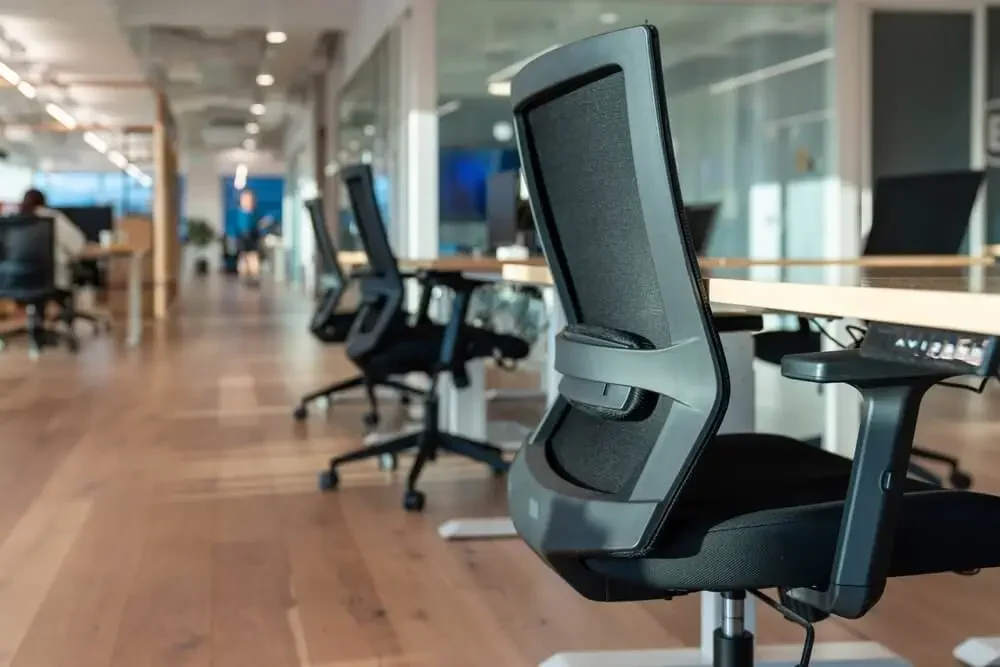
Walk into any office furniture showroom and you’ll encounter confusing terminology. Sales materials mention “task chairs,” “office chairs,” “executive chairs,” and “desk chairs”—often without clear explanations of what separates them. The confusion multiplies when you realize some retailers use “office chair” as a catch-all term while others use it to describe specific chair types.
Understanding these distinctions helps you choose seating that actually supports how you work rather than just filling space behind a desk. The right chair category for you depends less on labels and more on matching features to your daily activities, body needs, and work environment.
| Key Takeaways |
| “Office chair” is an umbrella term: It includes task chairs, executive chairs, conference chairs, and guest seating |
| Task chairs prioritize function and adjustability: They’re designed for active work with multiple ergonomic controls |
| Executive chairs emphasize presence and comfort: They typically feature larger proportions and premium materials |
| Your work activities determine the right choice: Consider how you actually spend your workday, not just aesthetics |
| Adjustability matters more than chair category: A highly adjustable chair serves you better than a rigid one, regardless of its label |
| Budget differences exist but overlap: Both categories span various price ranges with quality options at different investment levels |
| Used options exist for both types: Quality pre-owned task and executive chairs deliver ergonomic support at reduced cost |
“Office chair” serves as a broad category encompassing any seating designed for office or desk work. Under this umbrella, you’ll find:
When someone says “office chair” without specification, they typically mean either a task chair or executive chair—the two most common desk seating categories.
Task chairs are designed specifically for active desk work requiring frequent movement and position changes. The category emerged from ergonomic research showing that bodies function best with adjustment options and movement throughout the workday.
Core Task Chair Characteristics:
Task chairs suit people who spend most of their day actively working at desks—typing, writing, analyzing data, attending video calls, or switching between different computer-based activities.
Executive chairs emphasize comfort, presence, and traditional office aesthetics. The category evolved from corporate hierarchy where senior positions received larger, more substantial seating that conveyed authority.
Core Executive Chair Characteristics:
Executive chairs work well for people who need comfortable seating for varied activities including reading, phone calls, meetings in their office, and contemplative work—not just active computer tasks.
| Feature | Task Chair | Executive Chair |
| Primary Purpose | Active desk work with frequent movement | Comfortable seating for varied office activities |
| Adjustability | Extensive—typically 5-10 adjustment points | Limited—often just height and recline |
| Size/Proportions | Standard, compact for movement | Larger, more substantial presence |
| Typical Upholstery | Mesh, performance fabric | Leather, premium fabric, extra padding |
| Design Aesthetic | Modern, functional, ergonomic | Traditional, prestigious, comfortable |
| Best For | Computer-intensive work, active tasks | Varied work, meetings, executive roles |
| Movement Focus | Encourages position changes | Emphasizes single comfortable position |
| Price Range | Wide range, often mid-market | Wide range, often skews higher |
Choose a Task Chair If You:
Choose an Executive Chair If You:
You Might Need Both If: Your work includes extended computer sessions AND significant meeting/client time. Some professionals use task chairs for focused work periods and executive chairs in separate meeting areas.
Body Size and Proportions:
Existing Back or Posture Issues: Task chairs generally provide superior ergonomic support with adjustable lumbar mechanisms, while executive chairs offer cushioned comfort that may or may not support proper alignment depending on design quality.
Temperature Sensitivity: Mesh task chairs provide better breathability for people who run warm, while padded executive chairs with fabric or leather suit those preferring more substantial cushioning.
Adjustability directly impacts whether a chair supports your specific body and work style. A chair that perfectly fits one person may cause discomfort for another due to height, leg length, torso proportions, or sitting preferences.
Critical Adjustments for Most People:
Seat Height: Absolutely essential—allows proper foot placement and desk height alignment for any chair category
Lumbar Support: Highly valuable for extended sitting—positions support at your specific lower back curve
Armrest Height: Important for shoulder comfort—prevents hunching or elevated shoulders during keyboard work
Seat Depth: Very helpful for proper leg support—prevents pressure behind knees or inadequate thigh support
Recline Tension: Useful for comfort variation—controls how easily the chair leans back under your weight
Less Critical But Nice to Have:
Some executive chairs include many of these adjustments, and some task chairs offer only basic features. Don’t assume category automatically determines adjustability—evaluate specific chair models individually.
| Work Type | Must-Have Features | Nice-to-Have Features | Less Critical |
| Heavy Computer Use | Seat height, lumbar support, armrest height, seat depth | Recline tension, breathable materials | Headrest, premium upholstery |
| Mixed Tasks | Seat height, comfortable cushioning, basic recline | Lumbar adjustment, armrest height | Advanced adjustments |
| Client-Facing Roles | Professional appearance, comfort, adequate adjustability | Premium materials, larger presence | Extensive ergonomic controls |
| Creative/Flexible Work | Movement capability, basic adjustments, comfort | Style variety, color options | Traditional executive features |
Proper seating affects both comfort and function, though chair category matters less than whether the specific chair supports your body and work patterns appropriately.
Comfort Impacts Focus: Discomfort from poor seating creates distraction. Whether that discomfort comes from an inadequate task chair or executive chair makes no difference—both can fail to provide proper support if poorly designed or mismatched to your needs.
Posture Affects Physical Health: Sustained poor posture contributes to back pain, neck tension, and other issues. Task chairs with good ergonomic design typically encourage better posture through adjustable support, while executive chairs may or may not depending on their specific design and your body type.
Movement Supports Wellbeing: Bodies benefit from position variation throughout the day. Task chairs generally facilitate this through their design, while executive chairs may encourage more static positioning—though neither prevents you from taking breaks and varying your posture.
The key insight: a quality chair that fits you and supports proper posture matters more than whether it’s labeled “task” or “executive.”
Both task chairs and executive chairs span enormous price ranges. You can find basic examples of each category at budget prices and premium versions at significant investment levels.
Typical Patterns:
Quality Used Options: Both categories exist in used furniture markets with substantial savings. Quality task chairs from commercial environments often remain highly functional after initial use. Executive chairs from office updates frequently show minimal wear, especially leather models that age well.
Office Furniture Plus offers both new and quality used seating in both categories. Our showrooms in Irving, Austin, and San Antonio let you compare options directly and assess which features actually matter for your work style and budget.
Absolutely, and many businesses do this strategically:
Common Mixing Strategies:
By Role: Executive chairs for leadership offices, task chairs for general staff based on work activities rather than hierarchy alone
By Function: Task chairs at primary workstations, executive chairs in meeting areas or secondary office spaces
By Space: Modern task chairs in open collaborative areas, traditional executive chairs in private offices
By Budget: Quality used executive chairs for aesthetic spaces, new task chairs where ergonomics matter most
The key is intentionality—mixing chair types should serve functional purposes rather than appearing random or unplanned.
Longevity depends more on construction quality than category label.
Quality Indicators for Both Types:
Quality task chairs typically last 7-10 years with proper use, while executive chairs may last 10-15 years due to generally less intensive movement mechanisms. However, poorly constructed examples of either category fail much sooner, while exceptionally well-built models of both types can provide decades of service.
About Your Work:
About Your Space:
About Your Body:
About Your Budget:
The “task chair versus office chair” question ultimately matters less than finding seating that supports how you actually work. Task chairs excel at providing adjustable ergonomic support for active computer work, while executive chairs offer comfortable, substantial seating for varied office activities. Both categories include quality options at different price points, and both exist in used furniture markets with significant value potential.
Rather than choosing based on category labels, evaluate specific chairs against your work patterns, body needs, space aesthetic, and budget constraints. The best chair for you might be a highly adjustable task chair, a comfortable executive model, or something that blends characteristics from both categories.
Visit Office Furniture Plus at our showrooms in Irving, Austin, or San Antonio to experience different seating types in person. Our team helps you understand which features actually matter for your situation and can show you both new and quality used options across both categories. We’ll assess your needs and space to find seating that supports you effectively—whatever category it falls into.
Call us at (214) 630-3607 or get a quote online to discuss your office seating needs.